When planning a great camping trip, preparing for a power outage, or setting up a mobile workspace, having a reliable power source isn't just convenient—it's essential. Portable power stations have become the go-to solution for those who need dependable energy without the fumes, noise, or bulk of traditional gas generators. But with so many options on the market, how can you confidently choose the ideal one? Don't worry. By the time you finish reading this guide, you’ll know exactly how to pick the best portable power station for your specific needs.
If you've ever seen terms like "Watts" and "Watt-hours" (Wh) while shopping for a portable power station, you might be wondering why they matter.
Think of capacity as the size of your power station’s gas tank. It tells you how much energy it can store. The higher the capacity, the longer your power station can supply power.
Why this matters: If you need to charge high-powered devices like a laptop, mini-fridge, or CPAP machine during a camping trip or blackout, you'll need a larger capacity. But if you’re just powering smartphones and LED lights, you can get away with a smaller option.
Quick Tip: How to Calculate Your Needs
To determine the capacity you need:
Find out how many watts your device consumes (check manufacturer specs or stickers).
Estimate how many hours you’ll run the device.
Use this formula:
(Device Watts x Hours of Use) ÷ 0.85 (Efficiency Loss) = Required Wh.
Example: If you need to run a 60W laptop for 5 hours: 60W x 5 = 300Wh / 0.85 = ~352Wh
In this case, choose a power station with at least 400Wh capacity.
Capacity tells you how long a power station lasts, but power output determines what it can handle. Measured in watts, this number indicates how much electricity the station can supply at once.
Running Watts: The steady power provided to keep your device running.
Surge/Peak Watts: The temporary spike of power needed to start certain devices (like refrigerators or power tools).
Always look for a power station that can manage both the running and peak watts of your devices.
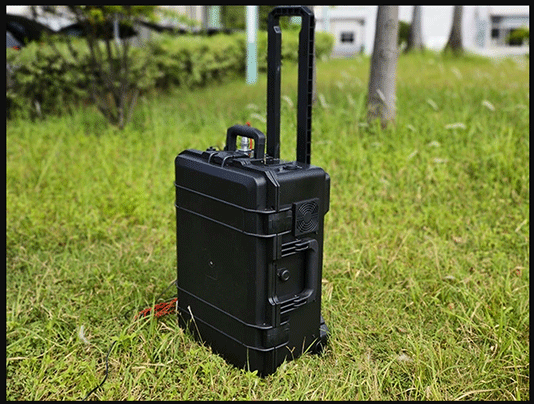
Not all portable power stations are made the same. Understanding their battery chemistry can make a big difference in your decision.
Best for: Lightweight travel, shorter lifespans needed.
Pros: Compact and lighter.
Cons: ~500-800 life cycles. Degrades faster over time.
Best for: Durable and long-term investments (up to 10 years).
Pros: ~3,000+ life cycles, safer with reduced fire risk.
Cons: Heavier.
Which to choose?
If you need something cost-effective for occasional weekend camping, go with Lithium-Ion. For home backup or frequent use, LiFePO4 is a better long-term investment.
It’s tempting to grab the first portable power station(https://www.ecelibattery.com/products/outdoor-portable-power-station/) that fits your budget, but you’d hate to realize later that it doesn’t have the right ports for your gear!
AC Outlets: How many standard plugs do you need? Look for "pure sine wave inverters" that ensure clean power—especially for sensitive electronics like laptops.
USB-C with Power Delivery (PD): A must-have for fast charging smartphones, tablets, or laptops.
DC Output/Cigarette Lighter Ports: Necessary for powering portable fridges and pumps.
You don’t want to wait all day for your power station to recharge. Make sure to examine its recharging capabilities.
Look for units with “fast charge” functionality, capable of recharging to 80% in an hour or less.
Going off-grid? Check the power station's solar panel compatibility. Pay attention to the solar input limit (in watts). If it only supports 100W panels, even a 200W solar panel won’t charge it any faster.
Are you able to use the battery while it charges? This is crucial for continuous power when using the station as a UPS.
Don’t buy more power than you actually need. Take a moment to identify your use case:
| Use Case | Recommended Size | Examples of Devices |
|---|---|---|
| Weekend Camper | 300-500Wh | Smartphones, lights, small fans, drones. |
| Van Life Explorer | 800-1000Wh | Mini-fridge, portable stove, laptop, GPS. |
| Home Backup User | 1500Wh+ | CPAP machine, microwave, TV, Wi-Fi routers, space heaters. |
Here are some bonus features that might be worth considering if they fit your needs:
App Control: Monitor battery levels and adjust settings using your phone.
UPS Capabilities: For uninterrupted power flow during blackouts—ideal for working at home.
Portability: Check the weight and whether it has handles or wheels.
1. Can a portable power station run a heater?
Yes, but only higher-capacity models. Space heaters often require over 1000W to run continuously—double-check your power station's output limits.
2. How long do portable power stations hold a charge?
Most lithium-based power stations retain their charge for 3-6 months. Regular charging every 3 months is recommended for battery health.
3. Are portable power stations safe indoors?
Absolutely, since they emit no fumes. Unlike gas generators, portable power stations are completely safe for indoor use.
Choosing the right portable power station boils down to understanding your energy needs and matching them to the station's specs. Whether you're lighting up your campsite, keeping your devices alive during van life, or ensuring your home essentials work in a blackout—there’s a power station for you.
Ready to make a confident purchase? Dive deeper by comparing top portable power station brands that fit your needs.# Markdown syntax guide
Install photovoltaic energy storage systems for your own home or company to save money and stabilize electricity consumption
Find a stable and reliable factory to assist you in expanding the market locally
Professional technical team and reliable energy storage products to provide a guarantee for your engineering project
 English